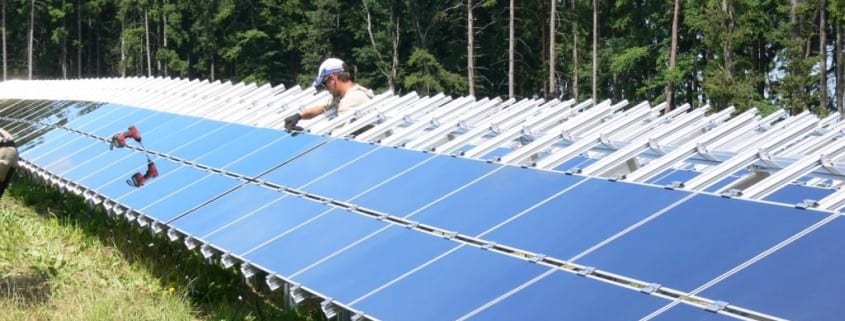
Ground-mounted systems are probably the simplest way to install solar on a larger scale compared to other types of installations such as roofs or parking structures. These systems can be held down by a variety of foundations, including concrete footings, pile driven posts, piers, metal earth screws or with ballasted holding trays.
One size fits all ?
Foundation systems need to correspond to the existing site considerations and soil static conditions according to engineering calculations and building codes. The one size fits all approach will not lead to the most cost and resource efficient results. Here are some key factors that will help to determine the foundation type:
- Tilt angle and tracking characteristics of the solar power system.
- Local design wind speeds and snow loads (If applicable) where the solar power system is to be installed.
- Support and racking configuration.
- Overall solar module system size and weight.
- Local design codes and project requirements.
- Soil characteristics relative to friction, sliding, consolidation, slope stability, salinity, etc.
- Brownfield or landfill