[youtube https://www.youtube.com/watch?v=fcoLUF-QAa8]
Thank you very much for the positive feedback – it was a real pleasure for us to work with such a great team! Let’s do the next one!

[youtube https://www.youtube.com/watch?v=fcoLUF-QAa8]
Thank you very much for the positive feedback – it was a real pleasure for us to work with such a great team! Let’s do the next one!
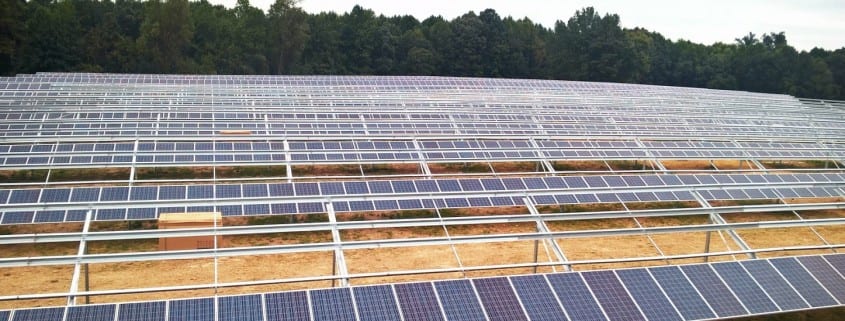
As photovoltaic (PV) projects have evolved over time, the industry has focused on reducing costs to increase the adoption of solar power. This reduction has been dramatic, and the corresponding increase in solar PV projects is exciting, with new records in project size and overall deployments announced nearly every year. As solar project costs drop so, too, have racking costs through the utilization of improved engineering analysis, appropriate and efficient material selection, and improved manufacturing approaches. Knowing that racking continues to play an integral role in solar installations, savvy project integrators are paying more attention than ever to products and solutions available to reduce costs and create job site efficiencies. To help end-users optimize PV installations, the following breaks down the project development and construction process, from start to finish.
By Andrew Worden, CEO, GameChange Racking
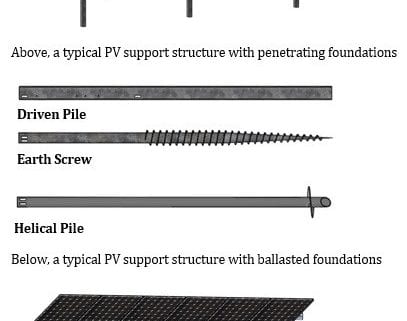
Foundation selection is critical for a cost effective installation of PV solar panel support structures. Lack of proper investigation of subsurface conditions can lead to selection of the wrong foundation type and can result in costly change orders and delays to the job completion date.
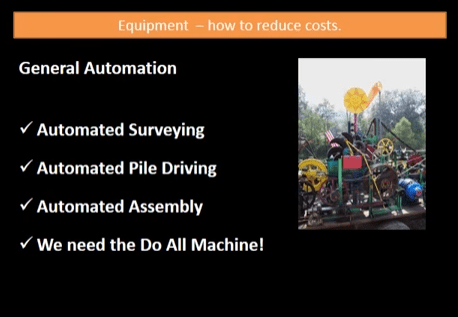
From the perspective of an installer the better the planning and the better the execution matches the planning the better the end result and the less likely it is that CO’s will be issued! Sounds easy – should be easy, but in reality….. it is not that easy!
If a project is executed on the fly – the costs have to be higher than well planned & executed projects so therefore the contingency has to be higher!
Check out the presentation to get some ideas how to reduce costs & call us to discuss and support your project!
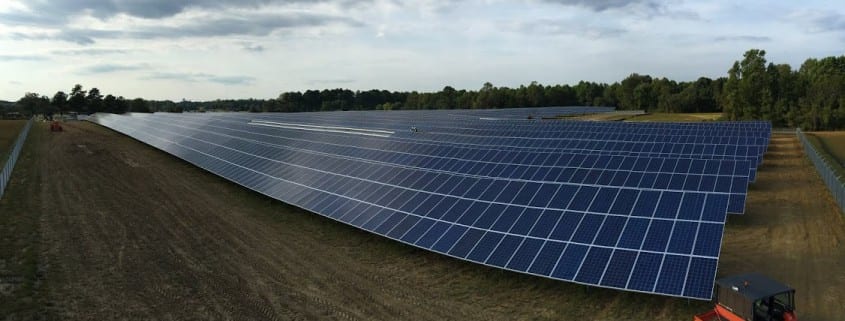
Solar EPCs in the US are competing for fewer projects. Increased specialization, efficiency improvements, and accelerating mergers and acquisitions are among the strategies used by the companies to survive.
One way to control margins is to manage projects systematically. “The amount of wasted time per project is in the 30% range”, says Heiko Schramm of Sunstall.Key points:
If you want to read more go to pv-magazine and read Charles W Thurston’s article.
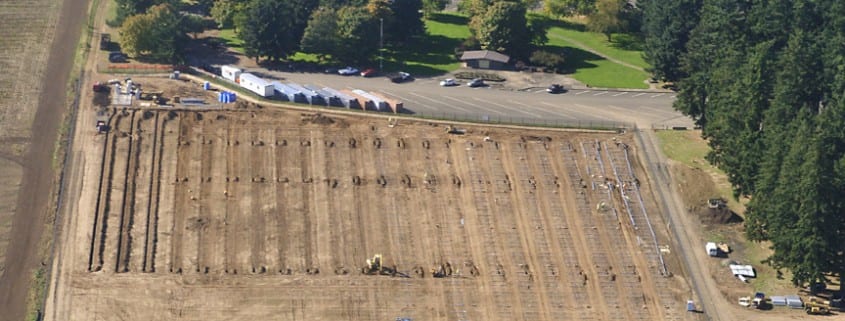
October 26 2011 – Aurora Oregon; Representatives from Portland General Electric, the Oregon Department of Transportation, Five Stars International and Contractors working on the Solar Highway 1.745 Megawatt project joined Advanced Energy Systems and Sunstall Inc. at the construction site today to mark the milestone surrounding the beginning of the Solar World module installation. With the final post driven in the six acre site, and over 50% of the Haticon Racking assembled it was time to start mounting the 250 watt solar panels. Assisting in unpacking the first module was the project brainchild, Allison Hamilton of ODOT. Other notables from ODOT were Lynn Aveberck, and Lynn Frank of Five Stars International. PGE representatives included Mark Osborne, Dawn Wilde, and Robert Ferraro.
When completed, the project will provide enough electricity to offset the use of both the North and Southbound rest areas at the project location, approximately 15 miles South of Portland Oregon on Interstate 5. As the primary Solar Contractor on the project, Advanced Energy Systems teamed up with SunStall Corporation for the racking installation, and Christensen Electric of Portland for the primary electrical installation. Read more
Sunstall, Inc. has officially become the first successful trainee of Array Technologies’ Certified Installer Network. Based in Novato, California, Sunstall brings industry leading installation services and project management expertise to their partnership with Array Technologies, Inc. (ATI). For projects within Sunstall’s Certified Installer scope they will also provide Operations and Maintenance services.
“We are now pleased to offer our customers superior tracking and racking systems alongside Sunstall’s outstanding installation services,” explained ATI Founder & CEO, Ron Corio. “This partnership will allow our customers to receive expert turnkey services at the lowest installed cost.”
“Together with our partner ATI we’re happy to provide the highest level of customer service for their industry leading products. Our partnership will ensure optimal performance and high yield over the entire lifecycle of ourcustomers’ solar plant investments.” said Heiko W. Schramm, VP at Sunstall Inc.
For more information on Array Technologies’ Certified Installer Network please visitarraytechinc.com/commercial/certified-installer-network/.
Dec, 17th 2013
I’m sorry I had to take off today before circling back with you.
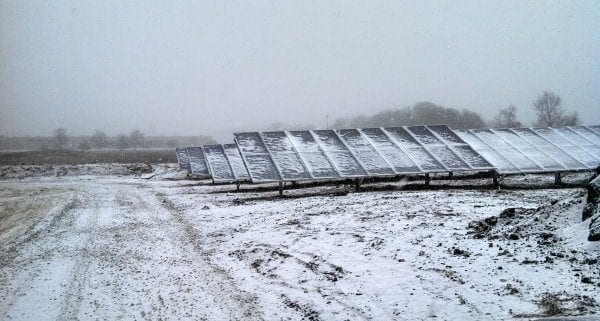
We’ve been impressed with SunStall’s efforts on behalf of the …….. Solar Park project despite the challenges. While some weather issues might/should be expected this time of year in WI, I honestly think that this Nov/Dec was extreme in terms of the wet/mud early only to be followed by the frigged temps – I think today was the nicest day we’ve seen in a month.
In no small part due to SunStall, it looks like we will meet out 12/31 deadline. The next project we do, I’ll owe you a steak dinner.
a MidWest Client

The $1/watt White Paper from the U.S. Department of Energy was a great start to kickoff discussions and movements towards the goal of making solar power competitive without any incentives. To achieve this goal, the cost of an installed PV system would break down into the following components:
• $.50/watt for Modules
• $.40/watt for BoS/Installation
• $.10/watt for Power Electronics
With new production capacities going online almost every week and new players consistently entering the global market, it seems that the question is not if, but when the module prices will hit the $.50/watt. Innovation, scale of production and fierce competition will lead the way to the defined goal, not only for the modules, but also for power electronics.
BoS/Installation
Currently, physical system costs, including labor, are accounting for about 75% of BoS costs for a ground-mounted installation. These costs are divided between structural components and the electrical system.
How can these costs be driven down to the $.40/watt goal? A 2010 Rocky Mountain Institute (RMI) workshop suggested the following steps:
• Reduce forces at work – such as reduction of the wind load
• Optimize structural form and materials
• Design for low-cost installation
[youtube http://www.youtube.com/watch?v=r0Cia6TK9Y4&w=560&h=315]
