
Sunstall’s Pile-Driving Fundamentals: Steel Piles and Corrosion
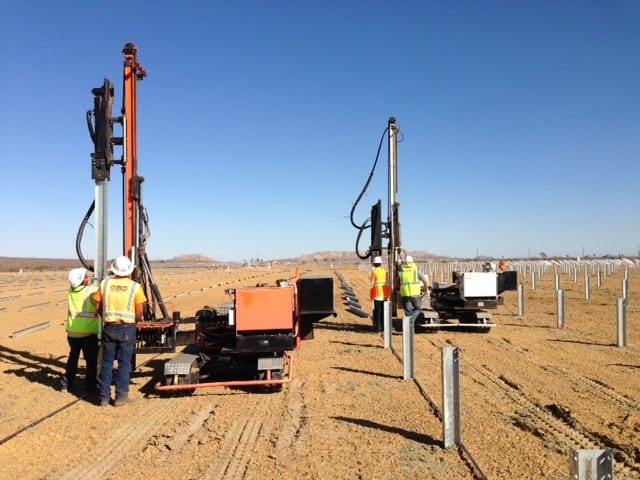
Having many other uses, steel piles are often used to build the foundations for utility-scale PV applications. In use, they become exposed to different types of corrosion of various extents. Some of the main elements that impact the level of corrosion are pile shape, driving method and the type of material. Common shapes include H-piles, pipe-piles, screw piles and disc piles – all of which can have different material types. H-piles have become the most used for solar structures, because they have very good structural characteristics. This allows them to be well-suited for the loads seen in solar installations.
In general, corrosion takes place when two different metals come into contact with a conductive liquid, resulting in a flow of DC electricity. Pile corrosion can be divided into two groups: Atmospheric and soil corrosion.
Steel Pile Corrosion – Atmospheric
This is the most visible form of corrosion. Since the steel is in constant contact with oxygen, the corrosion rate is governed by the presence of an electrolyte. The potential of hydrogen (pH), average seasonal humidity, and amount of sulfur dioxide (SO2) in the atmosphere are critical factors. They influence the effectiveness of the electrolyte and could increase degradation. The amount of humidity is especially important, because it determines the rate of deterioration. Sporadic changes in weather patterns and proximity to marine environments can have adverse effects.
Steel Pile Corrosion – Soil
This type of corrosion is caused by direct contact with moisture and chemicals in the soil. Consequently, it is much less predictable than atmospheric corrosion, because soil characteristics can vary within a single site. Furthermore, in contrast to atmospheric corrosion, soil acts as an electrolyte in below-grade corrosion. With oxygen being the primary catalyst of corrosion in this instance, it’s vital to know if the soil is disturbed or undisturbed. Importantly, previously undisturbed soils contain limited amounts of oxygen resulting in only a minor risk to steel piles.
Meanwhile, disturbed soils contain greater amounts of oxygen and thus present a higher risk of decay. In the event of soil corrosion, the shape of the pile plays an important role. For example, compared to H-piles, pipe-piles generally corrode slower. This is because the surfaces of the H-stack contact the soil, causing a heightened sensitivity to aggressive soils. With rounded stacks only the outer surface comes into contact with the soil, leading to a slower rate of deterioration.

Pile Corrosion Protection
Not to fear – there are multiple options for how you can protect your steel piles. Some of the options to minimize the effects of corrosive soils include employing zinc coatings, epoxy and other painted coatings, using thicker piles, impressing current systems, employing concrete encasements, and installing sacrificial anodes. Here is a further breakdown of those protective measures:
Zinc Coatings
Hot-dipped galvanizing and plating are the main methods for zinc coatings. Galvanizing is primarily effective against atmospheric corrosion. The disadvantage is that the coating is eventually depleted in a disturbed soil setting. This steel corrosion allowance ultimately affects the integrity of the structure.
Epoxy and other Painted Coatings
Similar to other preservation efforts, paints are actively used to prevent atmospheric and soil corrosion. However, depending on the type being used, they can have varying degrees of effectiveness. Coatings include standard paint, which can adequately prevent corrosion, or coal tar, which is a more durable and costly coating option. The damage of decay is typically the worst in the top one to three feet of soil, because it is here that the piles experience the greatest amount of oxygen exposure. Identifying these areas and maintaining them with proper coatings is key to preserving the PV structure for a 30-year life-span.
Alternative Pile Selection
Thick piles with sacrificial-steel provide additional structural integrity. The extra steel, similar to the concrete encasement, acts as a protective buffer. Over time the corrosion will be significant enough that this action is best combined with other strategies to achieve maximum protection.
Impressed Current
This technique converts active areas on a metal surface to passive, making them the cathode of an electrochemical cell. To cease the corrosive attack, introduce DC current, reducing the pH of the metal. This achieves cathodic protection. The added voltage and current interrupts the galvanic reaction and stops below-grade corrosion. This system is very effective, but requires constant maintenance, which can be costly.
Concrete Encasement
Similar to thicker piles, concrete foundations provide a barrier against corrosive soils. Specifically, each pile can be placed in a small concrete foundation, approximately three to six inches thick. Again, this should be an additional measure that gets combined with another pile corrosion protection plan.
Sacrificial Anodes
Magnesium anodes can act as another protective measure. Magnesium is higher on the galvanic scale than steel or zinc, resulting in it coming under attack before the other metals. The most commonly used during this process are strip or block anodes. These get electrically connected and are often used in combination with a galvanized zinc coating.
What’s Next for Sunstallers?
To maximize the lifetime value of your utility-scale PV application, identifying proper pile-driving fundamentals is highly critical. Above all, it is necessary to complete an in-depth inquiry into the surrounding factors of a project site. Identifying the best practices to follow in observance of PV structures and the degrading effects that corrosion can have on steel piles. is the first part of that inquiry. Having trouble pinpointing which protective method is right for you? We’d love to help!
Authored by Karolina Orlowska


Leave a Reply
Want to join the discussion?Feel free to contribute!