
Solar Fastening Dilemma- Part2!

Our solar fastening Dilemma – Where are we coming from?
The global solar market is growing and so is the pain of dealing with nuts and bolts as the standard method to connect an assembly. To review why Nuts & Bolts are holding the solar industry back visit : Torquing – the Solar Installation Mystery!
It’s been almost 5 years since I wrote this article being frustrated with the lack of quality and other related issues, such as:
- supply chain issues – procuring nuts and bolts in bulk guarantees inventory issues
- manufacturing issues- ordering an M10 and getting an DIN M10 bolt are two different things – oh – and btw the nut should match the bolt.
- losing nuts and bolts in harsh conditions is a given! Try installing them with gloves in NY at 20 degrees Fahrenheit.
- and then you have the discussion about the torque – if interested read my first article. See video below and you see what I am referring to.
- Nobody talks about O&M ……… I guess nobody wants to until the day the insurance company is going to ask.
On top of all of that I believe that a nut and bolt assembly connection can not be automated, which is what we need given the increasing volumes we have to install down the road!
Alternatives
Rivets
In my last article I stated that rivets have a huge advantage as it is a fire-and-forget approach and that you don’t need torque marks or have to check torque values. That statement is still true – but – over the last 5 years we have installed many projects with “rivets”( there are different brands and types but for the sake of the discussion I call them rivets) and what we found is :
- huge quality differences
- huge costs for the rivet guns
- high maintenance requirements for the rivet guns
- supply chain issues to get mouth pieces or other rivet gun parts
- dealing with the waste
Overall we found that we basically have to have one person on a smaller project site or multiple people on bigger sites just maintaining the rivet guns all day long. These people are zero productive but without them the installation teams cannot get anything installed. We also have to stock spare parts for the rivet guns otherwise we are running into the same issue!
Is there a quality difference when it comes to the rivets and does that make a difference? For sure , but the material supplier is trying to optimize the cost – they are not motivated to provide the fastest and lowest cost installation method.
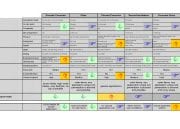
Have we tried different guns – spoken to experts? Yes , all of that. No difference – they all came back to you have to maintain the guns properly …..and yes they stated that some of the rivets are sub par …. – see table below:

So rivets can be a great solution if the rivet quality is high, and the rivet gun manufactures improve their equipment. Then they are superior to nut and bolt connections – why – see my previous article.
Spring Clips
Over the last 3 years several racking manufacturers have decided to move away from nuts & bolts and rivets. They design their system to accommodate a spring clip connection between the racking rail and the module frame.

The first system we saw and installed was from FTC Solar using the ARaymond solution. Great approach – why:
- only a plastic mallet necessary – no power tools
- easy and fast install
- no torquing or marking
- proven solution in the automotive industry
- no O&M
- easy to remove (no special tools necessary as with rivets)
The ease of installation without power tools while having similar advantages as the rivets makes this a solution of choice in markets with high labor cost.
Are these clips more expensive than rivets – probably – but I have no data to prove that. I also believe that design, volume and competition will bring the price down.

New racking solutions are following this concept like Full-Tilt, a fixed tilt racking system which uses spring clips as one of the options for the module installation!
The next iteration will be wedges(see photo above) who can be used for First Solar modules and many other applications – innovation at work!
One size does not fit all
It is clear that different markets need different solutions, but even in a low cost country the owner of a solar system has to think about the next 20-30 years. Have you read your maintenance documentation for the module installation? You should because you will find that you basically have to re-torque a portion of the system every year with or without any major wind events – why? Check out my previous article and the paragraph about vibration. So if that is ok then a nut & bolt solution is great.
Otherwise I would encourage solar asset owners to think about other methods of holding PV modules in place – maybe we are seeing new ideas where we don’t need any assembly material to keep the modules in position!?
Happy to hear about your experience and what I missed in my post.
#torquinginsolar #torque #solarinstallation #torquecheck #solarpanelfasteners #solarrivets #solarwedges #wedges #solarspringclips
Published by


Leave a Reply
Want to join the discussion?Feel free to contribute!