Microgrid Power – Tesla Megapack
The clean energy microgrid features a 2.5MW solar photovoltaic array that is DC-coupled to a 2.3-MW (9 megawatt-hour) battery energy storage system, comprised of three Tesla Megapacks. It also includes a microgrid control system, with protection and isolation devices that interfaces directly with PG&E’s distribution control center.
Major project elements
- 2.2 MW photovoltaic array DC-coupled with a 2.5 MW, 8.9 MWh battery storage system regulates output of intermittent solar to support the distribution grid and provides 100% renewable backup power for customers inside the microgrid
- 300 kW net-metered photovoltaic system
- microgrid control system with a control interface to the utility power distribution control center
- powerline recloser with advanced control
- electric vehicle charging stations capable of demand response
- Fully automated and unattended operation for both blue sky and islanding operations
3118
Hours of Work
August 2021
Construction Date
2.5
Size[MW]
California
Location
DCE – Ground Fix System
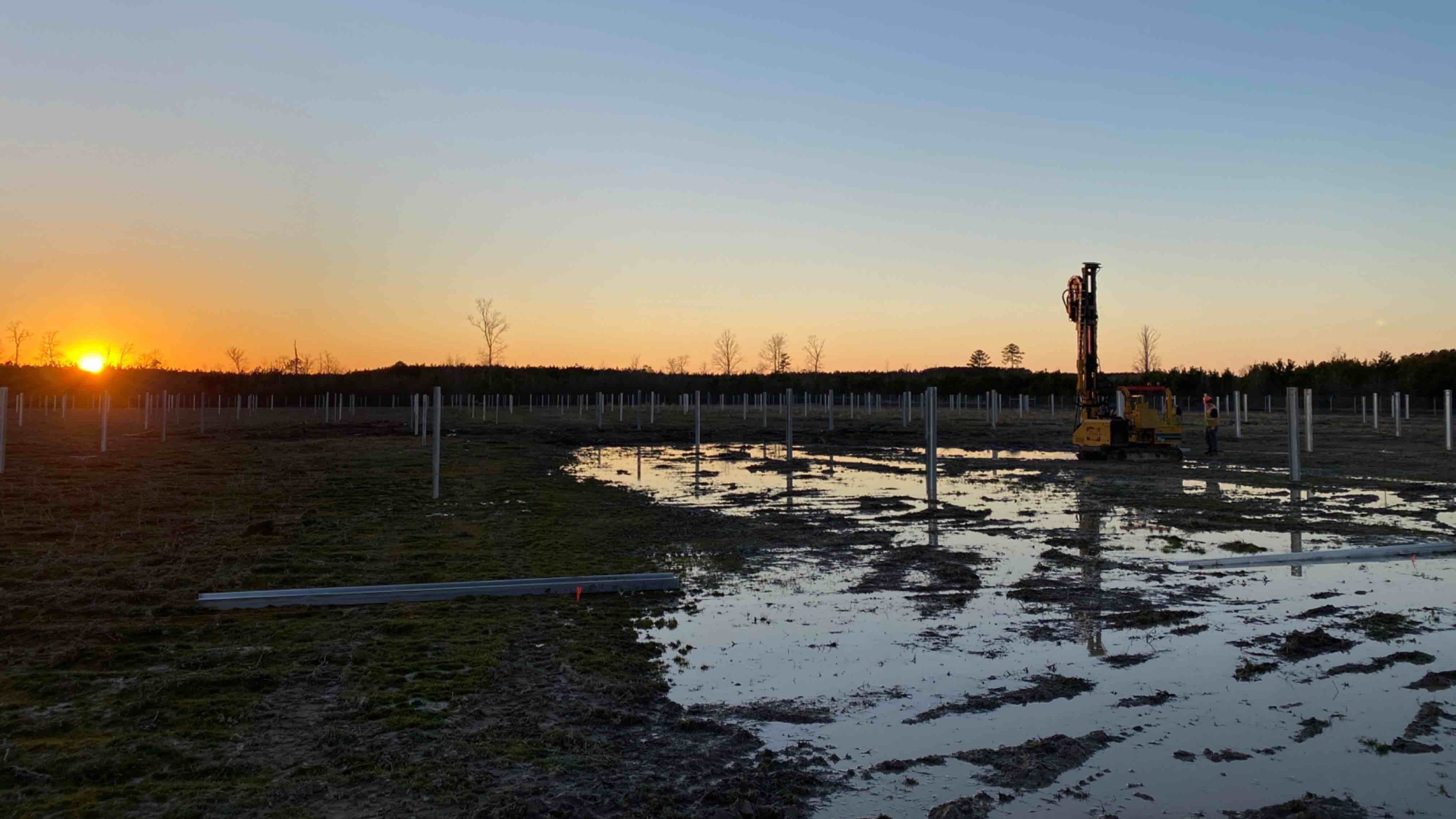
Embracing DCE-Ground Fix Systems in conjunction with precision pile driving enhances the robustness and efficiency of our projects. This strategic integration underscores our commitment to cutting-edge technology, ensuring optimal stability and streamlined construction processes.
Real life example for the use of a Microgrid
After the 6.4 earthquake centered in Ferndale, thousands of customers in the Humboldt area lost power. However, Redwood Coast Airport Microgrid’s (RCAM) did exactly what it was supposed to do. It continued powering its 19 customers, including two critical facilities for the region, the Arcata-Eureka Airport and the adjacent U.S. Coast Guard Air Base. The fully renewable microgrid automatically and seamlessly disconnected, or “islanded”, from the electric grid around 2:30am on Dec. 20, when the powerlines serving the area were de-energized due to the earthquake.
Leveraging the electricity stored in the microgrid’s onsite batteries, the system becomes an independent, PG&E-operated grid segment, that in this instance kept the power flowing to the airport and air base for nearly 15 hours, while the power remained off for much of the surrounding community.