1
2

At Sunstall, we own and operate a pile driving fleet to complete your project efficiently and on time. We have worked with local and international solar EPCs, developers, and mounting solution providers to offer superior pile driving services throughout North America.
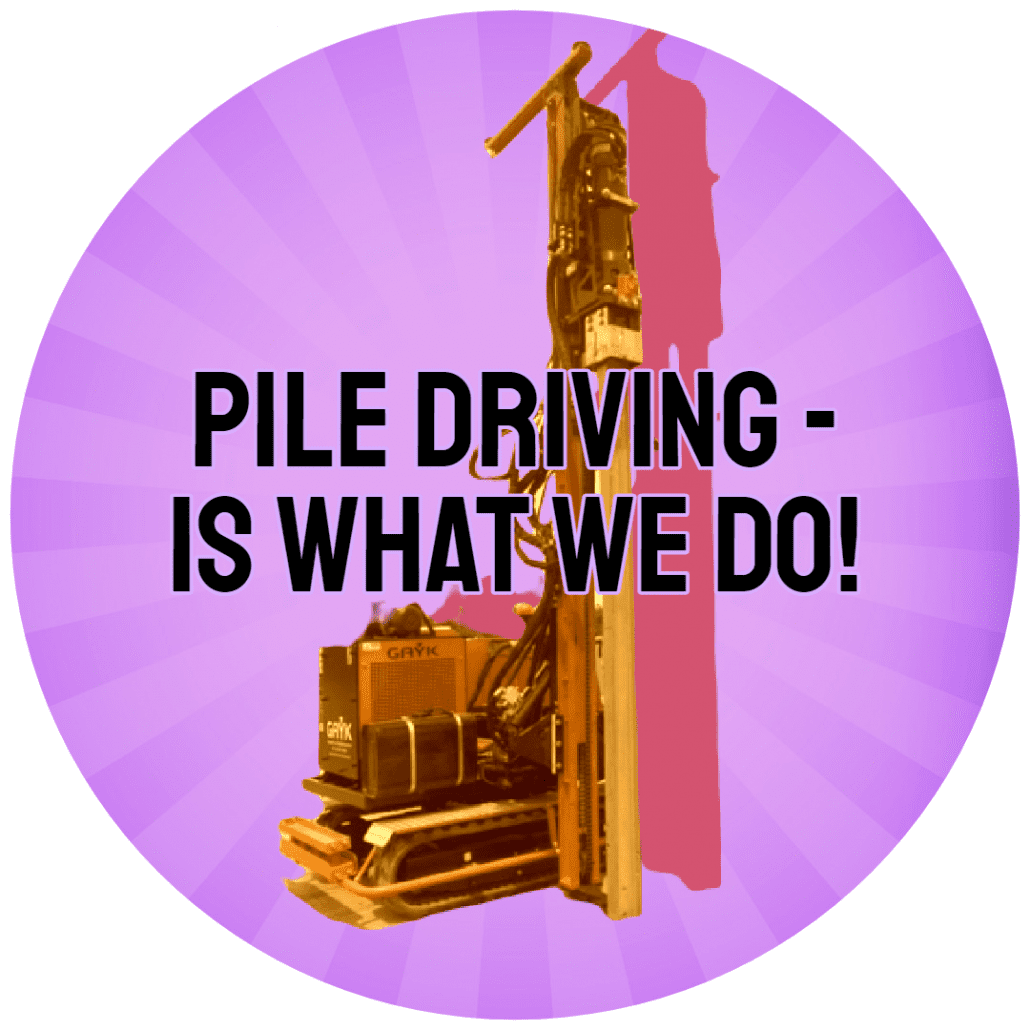
Our experienced pile driving crews use specialized, hydraulic operated pile drivers to place racking posts into the ground to the required depth without using poured concrete or other costly foundation support methods. We provide outstanding flexibility on all kind of ground conditions, experience with a variety of racking systems, and best in class piling performance.
Sunstall has worked in more than 35 states under very different conditions.
Ask our experts how Sunstall can support your project!
We want to be a part of the risk mitigation effort to ensure a successful project!
more than 800 MW installed
GPS guided Pile driving – fully automated system
This picture illustrates the standard approach using pins and string lines to locate and set the height for the pile driving. This works quite well on flat ground – not so much when you have uneven terrain and/or undulating ground conditions!
Sunstall has invested in GPS technology to design the tracker layout which fits to the project site while maintaining the allowed tolerances. The first step to be able to achieve that is to perform a take off of the site. With that a 3-d model can be established and the tracker can be design on top of that model. The outcome is a “heat-map” which shows whether the original design can be accomplished with the tolerances given, the un-graded site and the length of the piles. If not one of these parameters has to be updated to be able to built the array!
The final layout will be processed and the x,y,z coordinates will be uploaded into the piledriving machine. No string lines or pins necessary – machine finds the right position and the solar array will look phenomenal!
Pile Remediation
Hard soil
Not always can we drive piles into the ground without special preparation – here are the typical steps necessary:
- pre-drilling
- back-filling
- compacting
- re-driving piles again
Refusals
The #1 priority to deal with refusals in the most efficient way is to have a plan in place before they occur. Not only to reduce stand-down time and therefore cost but also to find the most cost-efficient solution for the challenge at hand.
The project execution team should have discussed:
- minimum embedment depth
- pull out values
- additional tolerances
- other foundation options
If these bullet points have been discussed upfront with the execution team can remediate the piles without any delay in the project.