Projects
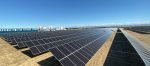
Neighborhood Power chose Canadian Solar bifacial modules because the additional energy gain is significant enough to compensate for the new tariffs on solar modules and steel mounting equipment, and the extra power gain made their solar projects economical again.
“When the solar industry was hit with tariffs on solar modules and steel, it seemed that rising landed costs had priced these projects out of the market,” said Stephen Gates, President, Neighborhood Power Corporation. “But with the additional power generated by Canadian Solar’s bifacial modules, delivered in the quantities and in the timeframe we needed, we were able to make the project economics work and bring these projects online by the end of 2018 as planned.” To contact Neighborhood
Tracker
The innovative Sunflower™ design from RBI Solar is not bound by the limitations of other commercial single-axis tracker systems. Accommodating variable slope tolerances, and having adjustable row lengths up to 120 modules, allows this system the flexibility to adapt to a variety of site conditions that used to impact tracker designs. The system is engineered to operate on North/South slopes up to 10%, which reduces the costs associated with civil work on potential projects. The patented Gearbox and Driveshaft system eliminate the need for dampeners by utilizing a distributed row technology, making O&M simple. No special tools or heavy equipment is required to install the system. Read more
6650
Hours of Work
November 2018
Construction Date
5.9
Size[MW]
Oregon
Location
Bifacial Modules
Bifacial (literally: two faces) solar modules can generate energy not only from the front side, but from the back side as well. With Canadian Solar’s Biku bifacial modules, the sunlight on the ground is reflected to the glass-covered back side of the module, producing extra solar energy in a solar system, significantly reducing the solar system’s levelized cost of electricity (LCOE), hence higher return on investment (ROI). Depending on the albedo (reflectivity) of the ground and other site conditions, daily energy yield for projects with bifacial modules can be 5-20% higher than with conventional polymer backsheet modules. This improved yield can dramatically enhance the economics of solar system deployments.
Adaptive Lean Management
Sunstall is striving for executional perfection. We are implementing lean constructions methods and procedures wherever possible to improve labor efficiency
. quality and safety. One solution does not fit all projects and so we are teaching and training our employees an adaptive lean management approach, which uses the principles of lean like Muda, Kaizen etc. and combines it with the reality on the field like trenches etc. – we are not perfect but we are trying to get there!